

On 9 November 1456, Count Ulrich II of Celje entered Belgrade as one of the most powerful men in Central Europe. He was there with the young Hungarian king, at a moment when Hungary was under pressure from rival noble families, Habsburg ambition and the ever-present Ottoman threat. He would not leave alive. During talks with the opposing Hunyadi faction, Ulrich was ambushed and killed. With him died the male line of the House of Celje, a dynasty that had spent two centuries climbing from regional nobility to the edge of royal power.
The story of Celje is not only a story of castles, battles and inheritance treaties. It is also a story of nerve, timing and marriage politics. The family’s race to power began in the 12th century as the Lords of Žovnek, a modest noble house in the territory of present-day Slovenia. By the fourteenth and fifteenth centuries, they had become the Counts of Celje, also known in German as the Counts of Cilli, and their ambitions had grown far beyond their original homeland.
The humble nobles become a dynastic powerhouse.

At first, the family rose by serving the Habsburgs. They provided military support with an army hardened on the battlefield, managed their lands carefully and expanded their wealth step by step. Their estates stretched across parts of present-day Slovenia, Croatia and Bosnia. Castles, armies and income gave them influence. Under Herman II of Celje they made a decisive step. They became trusted allies of the Hungarian court, a strategy which would ultimately raise them to the status of Princes of the Holy Roman Empire in 1436.
Climbing the ladder.
But influence alone was not enough. To survive among Europe’s great dynasties, Herman II needed legitimacy. For that, he used one of the sharpest political tools of the Middle Ages: marriage.
Herman II of Celje understood this better than anyone. He looked beyond local alliances and aimed at royal houses. Through carefully arranged marriages, the Celje family tied itself to Poland, Hungary, Bosnia and Italy. It safeguarded them from local rivals, like the Austrians who got increasingly frustrated that their initial fiefs were outgrowing their influence. Each marriage opened a door. Each daughter, cousin or granddaughter carried the family name further into Europe’s ruling circles. How important this strategy was to Herman II, shows when his son Frederick chose the love of his life – Veronica of Desenicev – as his second bride. It led to a Slovenian “Romeo and Juliet”-scenario; a real tragedy causing a bitter conflict between father and son. But that story is for another occasion.
The Polish alliance.
One of Herman’s first major successes was Anna of Celje, Herman’s cousin, raised at the castle after her father, count William, died. Being a descendant of Casimir the Great, she was connected to the old Polish Piast dynasty. This made her useful to Władysław II (Jagiełło), the Lithuanian-born king of Poland. After the death of his first wife, Queen Jadwiga, Jagiełło needed a bride who could strengthen his claim to the Polish throne. Anna was a niece of the deceased queen, young, politically valuable and almost certainly had little choice in the matter.
Anna arrived in Poland in 1401, as a teenager. She was 30 years younger than her husband, and the union was driven by dynastic necessity rather than affection.
Anna’s first years at the court were not exactly bright and shiny. The king found Anna not attractive and uneducated and he postponed the marriage and her coronation for two years. He left her alone frequently and ultimately tried to get rid of her by accusing her of adultery. But the events following showed how fragile his position still was. Polish nobles stood up for their “native” queen and he had to back off. When, in 1408, she finally gave him a daughter (and an heiress called Hedwig), their relationship and her life at the court improved a bit. However when Anna became deadly ill in 1416, Jagiełło only went back to visit her two months later, a few days before she died. Jagiełło married again and again until a male heir was born and Hedwig was no longer needed. She died in 1431 amidst rumors that she was poisoned.
Yet politically Herman’s strategy worked. Through Anna, the Celje family gained prestige at one of Europe’s important courts. Even an unhappy marriage could be a triumph on the chessboard of medieval power.
Amongst the rich and mighty of Europe.

Far more famous was Herman’s daughter Barbara of Celje. At about thirteen, she married Sigismund of Luxembourg, king of Hungary who became Holy Roman Emperor. Sigismund owed Herman a great deal. After the disastrous defeat in the Battle of Nicopolis (1396), Herman saved him from the Ottomans and he acted again as a stronghold when his position in Hungary became fragile. Sigismund was king consort of the Hungarian queen Mary who died in May 1395. Subsequently, the Hungarian nobility disputed his right to continue ruling and questioned his skills to defend the kingdom. They started a rebellion and imprisoned him. Herman II used all of his prestige to his support. To provide him a legitimate claim to the throne; he betrothed his 9 years old daughter Barbara. She was a cousin of Sigismund’s first wife Mary, so the marriage to Barbara connected him again to the Hungarian royal bloodline through family ties. When they married in Krapina in 1405, Barbara became queen of Hungary and one of the most powerful women of Europe.
Indeed, Barbara was not a decorative queen. She was a beautiful woman, well educated, multilingual, wealthy and politically active. During Sigismund’s long absences, she acted as regent in Hungary and managed extensive estates of her own. Her lands and income made her unusually independent and rich for a woman of her time. Sigismund even relied on her financial resources to support his political and military projects. She lent him money in return for pledges of property which she later acquired.

A woman with so much power, a royal status and self-confidence attracted admiration, but also enemies. Hostile writers and political rivals turned Barbara into the “Black Queen”: a woman dressed in darkness, surrounded by rumors of cruelty, magic, heresy and scandal. Croatian legends connected her with Medvedgrad near Zagreb. Locals said she traded her soul with the devil to protect the fortress against the Ottomans. On her shoulders was always a black raven which blinded everybody who confronted her. Legend has it that, still today, a giant snake – in fact Barbara’s tormented soul – dwells in the tunnels beneath the castle. But even though local legends describe her as a bad person, it is also said that her magic created the beautiful lakes of Plitvice, saving locals from a historic drought.
By far most prominent in these vicious attacks was, Silvio Piccolomini who later became Pope Pius II. His hateful rumors, instigated by Celje’s rivals, the Habsburgs, gained a lot of attention. He targeted not only Barbara but also belittled Sigismund as the emperor who could not “control” his wife. This hostile political propaganda was so tenacious that even well-known and respected historians put her away later as the “German Messalina”, a Roman empress accused of adultery and intrigue.
The real Barbara was more interesting than the myth. She helped shape politics at the highest level, was present in the world of councils, courts and diplomacy. She played an important role in stabilizing the turbulent political and religious climate in Europe. To illustrate this, she participated in the Council of Constance where the devastating papal schism of that time was resolved.
The myth of Dracula.
But the milestone which speaks most to our imagination, was her contribution to the creation of the Order of the Dragon in 1408. This chivalric order, founded by Sigismund and associated with Barbara as royal patron, was meant to protect the king and to defend the Christian realm, especially against the Ottomans. Its later fame owes much to one member. Vlad II, nicknamed Dracul of Wallachia (currently Romania). He was the father of Vlad the Impaler, the historical figure who later inspired Bram Stoker’s novel Dracula.
The seeds of disaster.
Barbara and Sigismund had one surviving child, Elisabeth of Luxembourg. At a young age, Elisabeth was very close to her mother. When in 1419 rumors reached Sigismund that Barbara committed adultery with the German knight Johann von Wallenroth, he turned against her, took away all possessions and exiled her to Oradea. Contemporary historians suggest that Sigismund used adultery as an excuse to deprive her of her possessions and powers because she became a threat to his position. Despite numerous attempts, Sigismund refused reconciliation until the 10-year-old Elisabeth begged him to review his decision. By 1424, Barbara was rehabilitated and reinstalled with all her possessions and powers.
Meanwhile the house of Celje flourished. Their possessions kept growing and they now owned more than hundred castles. In 1423 Ernest the Iron relinquished the feudal authority of the Habsburgs and in 1436 Sigismund elevated the counts to princes with nearly stately rights and imperial immediacy, meaning they came under direct authority of the Emperor. Amongst others they acquired the right to mint their own currency. The house of Celje now became a credible competitor of the Habsburgs. Herman’s strategy had clearly worked. Little did he know that dark clouds were looming on Celje’s horizon.
A bitter price for peace.
Around that time, the relationship between Barbara and Elisabeth turned sour when she married Albert II of Habsburg. Through her, the Celje bloodline entered the Habsburg dynasty, a match that linked former rivals. As there was no male heir, Sigismund of Luxembourg preferred a strong king consort to deal with the increasing problems of Hungary: Ottoman pressure in the south, uprising from the Hussites in Bohemia and an unstable kingdom of ever opposing nobility.
When Sigismund became ill and later died on 9 December 1437, it became clear that Barbara refused to recognize Albert II of Habsburg as the new ruler of Hungary. She actively supported his rival king Władysław III of Poland in his claim to the throne.

Albert, who feared her influence, quickly took away her power and all of her possessions with the active support of Elisabeth. He imprisoned her in Pressburg castle (Bratislava) from which she escaped. Barbara fled to Poland and kept further resisting Albert and her daughter.
When Albert II soon after died in 1439, he left behind a country that was deeply torn by a severe constitutional crisis. To make things more complicated, it turned out that Elisabeth was pregnant and she gave birth to a son in 1440 named Ladislaus the Posthumous.
But Hungarian nobles had never warmed to Habsburg rule. They refused to recognize the infant Ladislaus, despite his descent from Sigismund, and instead chose Władysław III of Poland as king, because they wanted a strong ruler who could keep the Ottomans at bay.
A stolen crown.
Elisabeth, however, had other plans. In one of the most dramatic episodes of fifteenth-century politics, the Holy Crown of Saint Stephen – token of royal power – was stolen from Visegrád with the help of her lady-in-waiting Helene Kottanner. When Elisabeth’s son Ladislaus was born, he was immediately crowned king at Székesfehérvár – the traditional coronation city – on 15 May 1440. Even the makers of Game of Thrones would not have thought of such a scenario.
Hungary now had two kings: the infant Ladislaus V and Władysław III of Poland. Civil war followed. The crisis outlived Elisabeth, who died in 1442, and it reshaped the politics of the kingdom. After Władysław III was killed at the Battle of Varna in 1444, Ladislaus cashed in on the clever move of his mother. He was now the legal heir, but real power lay elsewhere. As he was still a child, powerful men competed to govern in his name. First he was under custody of Frederick III who kept him hostage at the Habsburg court hoping to regain his influence on Hungary. But although the Hungarians recognized the child as their king, they named John Hunyadi as regent. Hunyadi was the Captain General who won great prestige as a defender against the Ottomans. The balance shifted again in 1452, when Ladislaus was released from Habsburg custody. Soon the young king came under the influence of Ulrich II of Celje, who was related to him through Elisabeth and Barbara.
A fatal ending.
Ulrich II officially became guardian of the young king, now named Ladislaus V. De facto, it was Ulrich II who ruled Hungary now, much to the frustration of the Hunyadis. After John Hunyadi died in 1456, Ulrich was appointed Captain General of Hungary. To the Hunyadis, this was not merely an insult; it was a direct threat to their influence and possessions.
And so on this disastrous 9 November 1456, the confrontation ended in Belgrade. It was Ladislaus Hunyadi, son of John Hunyadi, who set up the treacherous assassination of Ulrich II.
Ulrich entered Belgrade in the company of the king. Against all warnings, he left behind his guardians in full trust that the presence of the king would safeguard him. It proved a fatal mistake. The murder sent shockwaves through Central Europe. The mighty Celje dynasty, recently raised to the status of Princes of the Holy Roman Empire, collapsed abruptly. Ulrich had no surviving male heir and the Habsburgs eventually inherited Celje’s lands, wealth and military power because of earlier inheritance agreements. But before this, a three year succession war for control over Celje broke out and it only ended when Jan Vitovec, Ulrich’s skilled mercenary commander, was bribed to switch sides.

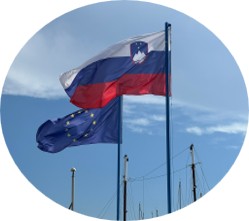
The vast and impressive Celje castle standing on the hills outside of Celje was once a token of military power and prosperity. But after Ulrich’s death, it soon began to decline and was eventually abandoned. However today the princes of Celje are proudly present on every Slovenian hilltop. Their coat of arms – the three stars – shines on the flag of Slovenia.
Also for Hungary, the collapse of the house of Celje had severe consequences. The kingdom remained divided and vulnerable. Elisabeth of Habsburg’s son, Ladislaus V, had Ulrich’s killer arrested and executed. But this event caused an outrage and a severe political crisis, so strong that he fled to Prague where he died soon after.
It marked the beginning of a chain of turbulent events which left the Hungarian kingdom weakened, facing struggle after struggle. Decades later, in 1526, the Battle of Mohács ended the life of King Louis II, one of the last Hungarian kings. It would open the way for even greater Ottoman pressure and for the Habsburgs to claim lasting power in Hungary. The fall of Celje was not the only cause of these later events, but it was one of the turning points in the long struggle for power in Central Europe.
The queens of Celje.
Elisabeth’s Habsburg daughters – Anne of Austria and Elisabeth of Habsburg – married German and Polish royals. This way they carried the Celje bloodline into nearly all European dynasties.
The irony is irresistible. Herman II of Celje wanted his family to stand among Europe’s ruling dynasties, strong enough to rival the Habsburgs. In one sense, he failed: Celje’s male line vanished with Ulrich’s murder. In another sense, he succeeded beyond imagination. Through the queens of Celje — Anna, Barbara, Elisabeth and their descendants — the family’s bloodline flowed into many European royal houses. For instance the current British king Charles III is a 500-plus-years distant relative of Herman II’s great-granddaughters.
The House of Celje did not conquer Europe. It married into it. And although a sword blow in Belgrade destroyed its political future, its family legacy survived in a quieter, more durable form: in the tangled ancestry of European royalty. History rarely gives dynasties the ending they expect. Celje’s ending was bloody, sudden and dramatic — but not entirely final.
And as for that fatal day in Belgrade … who knows what the map of Europe would have looked like if Ulrich II had stepped out alive.
Leave a Reply