

“What is it… something in the water out there?” President Eisenhower asked, surprised, when he met several medal-winning athletes from Pueblo, Colorado in 1953.
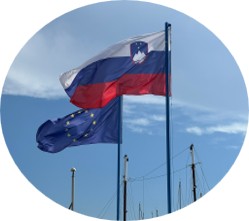
Since gaining independence, Slovenia has earned 59 Olympic medals and consistently ranks among the top 10 nations in Olympic medals per capita. Four of these medals were earned at the most recent 2026 Winter Olympics, where Slovenia occupied the fourth placed in the per capita ranking. It makes the country more effective than participants with much larger populations, such as Germany and the United States.
But the country also boasts world-class cyclists, top athletes in judo, wall climbing, basketball, and winter sports, as well as a highly active population. With such impressive achievements, one might rightfully ask: “Is there something in the water?” In Slovenia, this question takes on a literal meaning – especially in Rogaška Slatina, a town famous for its mineral-rich springs.
Indeed, there has to be something in the water.

Healing water.
The therapeutic qualities of the Rogaška Slatina springs have been renowned since Roman times. Over thousands of years – estimated at around 8000 – the water has traveled deep underground, at depths ranging from 280 to 660 meters, dissolving rocks along its path. This process results in highly mineralized water containing more than 1000 mg of geogenic CO₂ per liter and an impressive 13,000 TDS (total dissolved solids). No other European mineral water is known to match these levels. For comparison, Slovenia’s well-known Radenska mineral water contains only 364 TDS, while seawater has approximately 40,000 TDS, according to modern analyses.
The healing and laxative effects of Rogaška water were observed in ancient times by shepherds and villagers, and stories spread about people who were cured of various abdominal diseases. The first notable attempt to link its mineral composition to its medical impact was made by the Swiss alchemist Leonhard Thurneysser in 1572 – a year still prominently displayed on every bottle of Rogaška water. According to historical records, Thurneysser claimed to discover five healing elements in the water, including gold. While this was a nice – but not so scientific – attempt, he did not come even close.
Nevertheless, the mineral-rich water presented a golden opportunity for health tourism. According to historical records and local legend, Peter Zrinjski, a prominent Croatian ban (governor), was said to have been miraculously healed by Rogaška’s mineral water.
Amongst Europe’s most famous spa’s.
In 1676, the first inn was built by the springs, marking the beginning of spa tourism in Rogaška. Although Rogaška became the most famous Slovenian spa, it was not the oldest; that distinction belongs to Dobrna, where the first spa was established in 1403.

By 1687 Dr. Johann Benedikt Gründe published one of the earliest scientifically supported analyses of the springs, titled Roitschocrene (Latin for Rogaška spring). He confirmed the abundant presence of minerals such as magnesium, calcium, and sulphates. Later, the Vienna School of Medicine referenced the beneficial water in their Praxis Medicae as a remedy for digestive problems, stress, and headaches. Its popularity soared throughout the Habsburg Empire and beyond and Rogaška water became world famous. Between 1801 and 1869, it became the third most sold mineral water worldwide, ranked just behind Vichy (France).
Driven by its fame, spa-tourism developed quickly in Rogaška Slatina which transformed into a renowned spa destination in the early 19th century. In 1813, Count Ferdinand Attems spearheaded the development of a modern spa complex around the mineral-rich springs. Several hotels soon appeared, and the first of these is today’s Grand Hotel Rogaška—a landmark that still stands as a testament to the town’s illustrious past.

By 1819, the spa’s prestige grew with the construction of the magnificent Temple pavilion. Designed by Trieste architect Nikola Pertsch, the pavilion was built to protect the main spring and later lent its name to the famed Tempel water brand. Around this period, Rogaška Slatina welcomed its first resident doctor, setting the foundation for health tourism. Special mineral-water baths, known as “Stahlbader,” became a key attraction for visitors seeking therapeutic treatments.
The Grand Hotel’s Crystal Hall soon became the heart of social and cultural life. This opulent venue echoed with the imperial charm of its Habsburg guests, who attended enchanting concerts and glamorous events. One of the most enduring traditions is Ana’s Ball, a society gathering with a history spanning over two centuries.
Ana’s ball.
On July 25, 1846, the legendary composer Franz Liszt performed at Ana’s Ball, a tradition that continues to captivate guests to this day.
The arrival of the Vienna-Trieste railway further elevated Rogaška Slatina’s status. With improved access, a steady stream of noble visitors and royals—including Emperor Ferdinand—became regular guests, drawn by the promise of the invigorating waters and elegant surroundings.
By the mid-19th century, Rogaška Slatina had firmly established itself among Europe’s elite spa towns. It joined the “club” of European Spas such as Karlovy Vary in the Czech Republic, Baden-Baden in Germany, and Spa in Belgium. The latter became the namesake for all healing water sources with resorts for relaxation and treatment.
After Slovenia’s independence, Rogaška faced challenges, but today it once again reflects the spirit of its glorious 19th-century past. Many beautifully restored hotels now welcome tourists seeking mineral or thermal water cures, beauty treatments, relaxing massages, culinary experiences, outdoor activities, or recovery under medical guidance.
With more than 400 years of notable history and its beautiful conservation, Rogaška’s heritage aligns well with the 11 European spas in UNESCO’s “Great Spa Towns of Europe”-list, but it is not nominated yet.

As for its illustrious water… production quality increased significantly in 1908 when Joseph Knett, a geologist from Karlovy Vary, captured a highly productive spring at Rogaška. This spring was exceptional because the natural pressure from high levels of CO² pushed the water to the surface without the need for pumping.
Donat Mg.
The water from this source was sold under the brand name “Donat”. Inspired by the nearby Donačka Gora. Today, it continues to supply approximately 31 million liters of this unique acidulous water each year. In 1975, geologists drilled into an even more promising part of the reservoir, and the water’s name changed to Donat MG. This new brand eventually became the most prominent Rogaška product, with more than 35 million bottles sold yearly. While Donat MG is celebrated for its medical uses, the original Temple brand remains available as a regular mineral water.
The bottles used to display the legend of Apollo, who is said to have ordered his winged horse Pegasus to strike a rock with his hoof, causing a healing spring to emerge. Such “divine” narratives are also found at similar springs in Hungary (Táltos horses), France (the horse of Saint Martin), and Iceland (Odin’s horse), and they contribute to the rich tradition of drinking and bathing in Rogaška water.
So we know for sure now that in Rogaška there is definitely something in the water. But, as much as it supports your health, it will not help you to win any medals. I guess we will have to look for another explanation for Slovenia’s top sportive performance.
Something in the air maybe ?
Leave a Reply