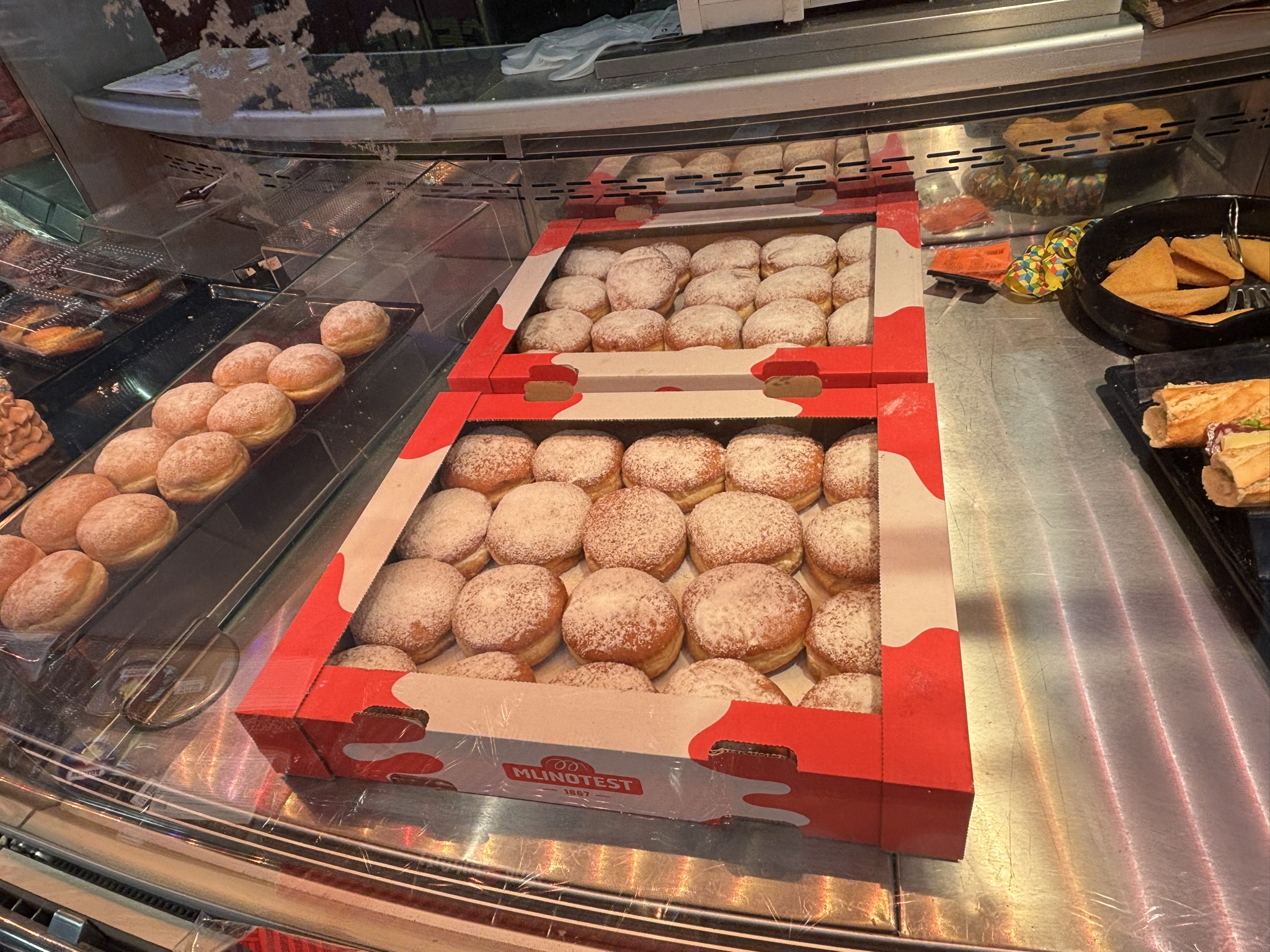

They are a beloved treat in Slovenia and enjoyed any time of year, but during Carnival (Kurentovanje) krofi become absolutely essential. Deep-fried until they reach a golden brown color, krofi are distinguished by a delicate line in the middle—a mark of their unique baking process. Traditionally, they are filled with sweet apricot marmalade and generously dusted with icing sugar, creating a pastry that is as delightful to look at as it is to taste. But where did this beloved treat originate? The answer is both fascinating and contested.
All over the world.
Despite their popularity, krofi are not originally a Slovenian dish. Their appeal crosses borders, with variations found worldwide in all sorts of shapes and flavors. Some sources attribute the invention of krofi to Cecilija Krapf at the Vienna court in 1690. Maybe this is why, in German, they are known as “kraphen”. In any case, the delicacy quickly spread throughout the former Austrian-Hungarian empire.
However, other accounts suggest that doughnut-like pastries existed much earlier: similar treats have been discovered in ancient Egyptian tombs, and the Romans baked a comparable pastry called “globuli.” These stories highlight the uncertain history of krofi, leaving open the possibility that Cecilija Krapf simply revived a much older recipe.

Not donuts.
Krofi are frequently likened to American doughnuts, though the origins of the latter can be traced to Dutch immigrants in the United States. As far back as the 14th century, Dutch communities celebrated New Year with “oliebollen,” deep-fried spheres dusted with sugar, still a cherished festive treat in the Netherlands today. In Belgium, “smoutebollen”—originally fried in lard—remain a beloved snack, especially at winter fairs and carnivals. These airy pastries are also known in Slovenia, but they are affectionately called “mice.” Germany’s “Berliner Pfannkuchen” famously fill the streets of Berlin each New Year’s Eve, while France’s “beignets” are central to Mardi Gras festivities, and Spain’s “churros” are synonymous with lively street breakfasts dipped in chocolate. Poland’s “pączki” are celebrated with gusto on Fat Thursday, marking the start of Lent, and Italy’s “bomboloni” delight crowds at seaside festivals. Ukraine’s “pampushky” add sweetness to Christmas tables, Türkiye’s “tulumba” is a staple at Ramadan celebrations, Greece’s “loukoumades” are showered with honey during community gatherings, the Czech Republic’s “kobliha” bring flair to city fairs, and Hungary’s “bécsi fánk” (Viennese doughnuts) are enjoyed in bustling markets. Each of these pastries shares the core technique of frying dough—sometimes filled, sometimes topped, sometimes with a hole, sometimes without—creating a tapestry of flavors and traditions across Europe.
While krofi share similarities with all these pastries, their unique characteristics and history distinguish them within the European tradition of fried dough. The delicate line around their golden exterior, their classic apricot marmalade filling, and their role in Slovenian carnival celebrations set krofi apart.

Krofi capital.
At the height of the season around Ash Wednesday, Trojane—Slovenia’s undisputed “krofi capital”—buzzes with activity as tourists and locals alike line up each day to savor this beloved treat. During carnival week, the demand soars, with over 100,000 krofi baked. Since its opening, gostilna Trojane has produced more than 100 million krofi, and today the establishment can serve up to 800 guests at once.
Historically, the custom of baking krofi at this time of year was closely linked to the onset of Lent. Before Lent began, families would use up surplus flour by baking krofi and other pastries, ensuring nothing went to waste. Any leftovers were strung up and dried, providing a simple treat that could be soaked in milk or coffee and enjoyed throughout the forty days of Lent, right up to Easter.
In all kinds of shape, taste and prize.
Today, krofi are no longer confined to Lent or carnival—they’re a beloved treat found everywhere, anytime in Slovenia. Much like their American doughnut cousins, krofi now come in a dizzying array of flavors and fillings. From classic apricot jam to chocolate, Nutella, vanilla cream, honey, apple, bacon… One memorable creation was a krofi filled with lavender-infused honey, a nod to Slovenia’s thriving honey culture. And just last year, Spar introduced a krofi stuffed with the much hyped Dubai chocolate. Creativity (or should we say krofitivity) has no limits.
Which brings us at the national competition for the best donut, organized this year for the sixth time already. This year, Slaščičarna Berzo from Vrhnika won the prize for the best classic donut and Terme Dobrna was awarded for the most innovative one.

Prices vary, but krofi usually don’t come very cheap. The most basic donuts filled with jam are sold around 0.80 and 1.50 euros per piece but in pastry shops and bakeries they go around 2.5, even 3.5 Euro depending on the ingredients. That is a major rise compared to 5 years ago. Nearly all ingredients including the baking oil and prices of energy have substantially increased last years. Even prepared at home krofi cost around 75 cents a piece, not including cost of energy. However baking them at home brings the joy of several generations sticking together to celebrate this centuries old carnival tradition.
But most families today prefer to buy them, and clearly the price does not scare them off seeing the long queue at Chopova Street where hotel Slon sells krofi for already 60 years during the carnival week, even at 3.5 euro a piece.
While krofi are available all year round; they never taste the same as during Carnival, even dough (sorry 😊) always the same recipe and ingredients are used.
In the moonlight shadow.
That missing ingredient…? It should be a cold Shrovetide evening when the Kurents are dancing in the streets. Standing next to the crackling bonfire, your imagination perceives some whimsical shadows hiding in the pale moonlight…
I can guarantee… Krofi taste so much better then.
Visit Trojane: follow link
Leave a Reply